Different Types of Steel and Why They Matter in Cold Forming
Discover how Structural Steel Fabrication, plate work, and profile cutting shape South African projects. From warehouses and farms to stadiums and wind farms, steel is the backbone of modern life.
Categories:
Date Posted:
June 11, 2026
Different Types of Steel and Why They Matter in Cold Forming
Steel is one of those materials people see every day but rarely stop to think about. It’s in warehouse roofs, retail shelving, agricultural structures, trailers, mining infrastructure, factories, and even the car parked outside your office. Yet not all steel is the same. Far from it.
In the cold forming industry, the type of steel you choose changes everything. Strength. Finish. Formability. Cost. Durability. Even how smoothly a production line runs.
At first glance, one steel coil may look almost identical to another. But once it hits the rollers and starts being shaped into purlins, angles, sheeting, or structural sections, the differences become obvious pretty quickly.
Let’s unpack three common steel types used in the industry:
- Hot Rolled, also known as Commercial Quality or “Black Steel”
- ISQ230
- S450
Each serves a different purpose, and each brings its own strengths to the table.

Hot Rolled Steel, The Tough Workhorse
What Is Hot Rolled Steel?
Hot rolled steel is produced at extremely high temperatures, usually above 900°C. At these temperatures the steel becomes softer and easier to shape and roll into large sections or coils.
Because the steel cools naturally after processing, the surface develops a darker oxidised finish. That’s why people in the industry often call it “black steel.”
It’s not polished. It’s not shiny. But it gets the job done.
You’ll often hear it referred to as:
- Commercial Quality steel
- CQ steel
- Black steel
- Hot rolled coil
Same family, different nicknames.
Why Is It Popular?
Honestly, because it’s practical.
Hot rolled steel is widely used where appearance isn’t the priority and where cost-effectiveness matters more than tight dimensional tolerances. Think structural brackets, general fabrication, supports, agricultural equipment, and industrial components.
It’s easier on the wallet than higher-grade steels, which makes it attractive for large projects where volumes add up fast.
There’s also something rugged about black steel. Walk through a fabrication workshop in Middelburg or Witbank and you’ll probably see stacks of it waiting beside welding bays, carrying that familiar dark mill scale finish.
The Limitations of Hot Rolled Steel
Here’s the thing though. Hot rolled steel isn’t always ideal for precision cold forming.
Because the steel cools naturally after manufacturing, there can be slight variations in thickness and shape. The surface finish is rougher too. That can affect consistency during forming processes where accuracy matters.
For simpler fabrication jobs? Not a problem.
For high-speed roll forming lines producing structural sections? Different story.
That’s where steels like ISQ230 and S450 start stepping into the spotlight.
Cost Efficiency in a Competitive Gauteng Market
ISQ230 Steel, The Balanced Performer
What Is ISQ230?
ISQ230 is a cold forming steel grade designed specifically for improved consistency and formability.
Compared to hot rolled steel, it has a cleaner surface finish and tighter dimensional control. In many operations, it’s recognised by its silver appearance, especially when supplied in coated or treated finishes.
The “230” refers to the steel’s minimum yield strength of around 230 MPa.
That means it offers a decent balance between strength and flexibility. Not too soft, not too rigid. Kind of the middle-ground player that quietly keeps production moving.
Why Manufacturers Use ISQ230
ISQ230 works well in applications where forming accuracy matters.
Cold forming equipment relies on predictable steel behaviour. If the material twists, springs back unpredictably, or varies in thickness too much, production slows down. And slow production costs money.
ISQ230 gives manufacturers more consistency during forming.
That’s important when producing:
- Light structural sections
- Sheet metal profiles
- Channels
- Angles
- General cold formed components
The smoother surface also makes it easier for coating, painting, or finishing later in the manufacturing process.

A Better Surface Finish Matters More Than People Think
It sounds small, but finish quality affects a lot.
A smoother, cleaner steel surface reduces wear on forming rollers. It can improve paint adhesion. It also creates a more professional-looking final product.
And let’s be honest, appearance matters now more than it used to. Industrial buildings, retail developments, and commercial projects increasingly want structural materials that look clean and modern, not rough and heavily oxidised.
S450 Steel, High Strength for Serious Structural Work
What Is S450 Steel?
S450 is a high-strength structural steel grade commonly used in cold forming applications.
Like ISQ230, it often comes in a silver finish, but the real difference lies in the strength. S450 has a minimum yield strength of around 450 MPa, almost double that of ISQ230.
That extra strength changes what manufacturers can achieve.
Suddenly you can produce lighter sections without sacrificing structural performance. That’s a big deal in modern construction.
Where S450 Is Used
S450 steel is heavily used for manufacturing:
- Z sections
- C sections
- Purlins
- Roof sheeting
- Wall sheeting
- Angles
- Structural framing systems
These components form the skeleton of many industrial and commercial buildings across South Africa.
Drive past a logistics warehouse on the N4 or a new agricultural storage facility in Mpumalanga and there’s a good chance S450 steel helped hold it together.
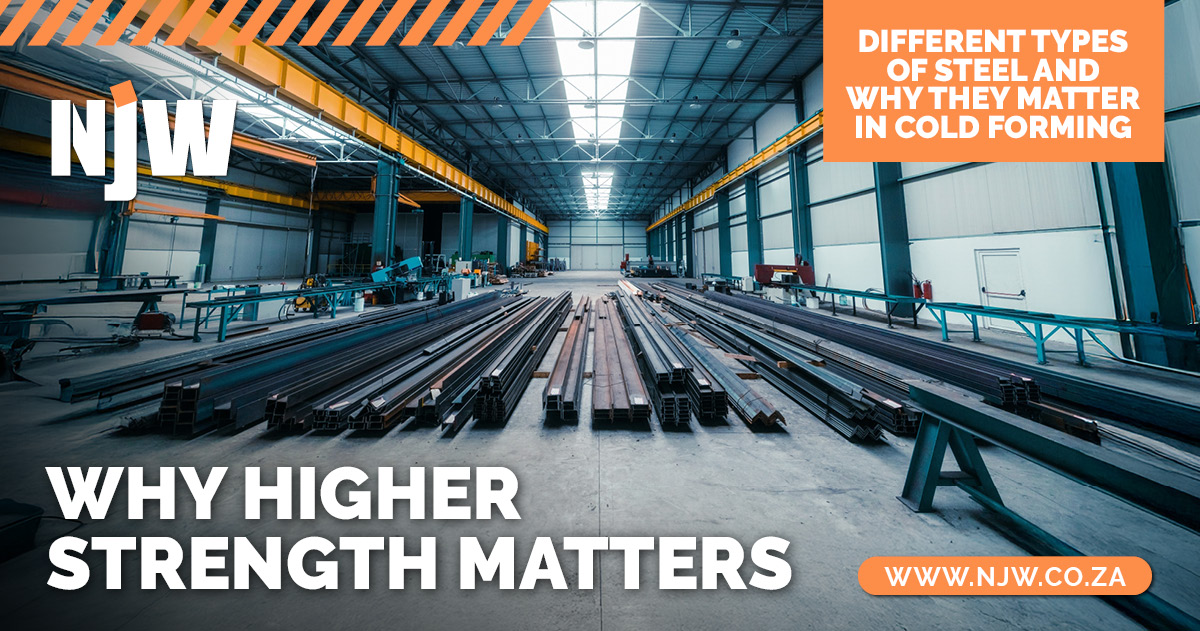
Why Higher Strength Matters
Higher strength steel allows manufacturers to use thinner material while still achieving excellent load-bearing performance.
That creates several advantages:
Reduced Weight
Lighter structural components mean easier transport, faster installation, and reduced handling costs on site.
Material Savings
Because the steel is stronger, less material may be needed to achieve the same structural outcome.
Improved Span Capability
High-strength purlins and sections can often span longer distances, reducing the number of support structures required.
Better Structural Efficiency
Engineers love efficiency. S450 helps create stronger structures without unnecessary bulk.
And in industries where every kilogram matters, that efficiency translates directly into cost savings.
Why Cold Forming Changes the Game
What Is Cold Forming?
Cold forming shapes steel at room temperature using rollers, presses, and specialised tooling.
Unlike hot forming, the steel isn’t heated during the shaping process. Instead, the material is gradually formed into the desired profile through mechanical pressure.
It’s a bit like feeding dough through a pasta machine, except the dough weighs several tonnes and could probably survive a tornado.
Benefits of Cold Forming Steel
Cold forming has become hugely popular in modern manufacturing for good reason.
Excellent Dimensional Accuracy
Cold formed sections maintain precise shapes and consistent dimensions. That matters when components need to fit together perfectly on site.
Faster Production
Modern roll forming lines operate at impressive speeds. Once set up correctly, production becomes highly efficient.
Reduced Waste
Cold forming creates less material waste compared to many traditional fabrication methods.
Improved Strength
Interestingly, the forming process itself can slightly increase the strength of steel through strain hardening.
Cleaner Finishes
Cold formed products generally have cleaner edges and a more polished appearance.
That’s especially important for exposed structural elements and architectural steelwork.

Choosing the Right Steel for the Job
There’s No Universal “Best” Steel
This is where people sometimes get it wrong.
S450 isn’t automatically better than ISQ230. ISQ230 isn’t automatically better than hot rolled steel. The right choice depends on the application.
If you’re building heavy-duty structural purlins for a warehouse roof, S450 makes a lot of sense.
If you need cost-effective general fabrication material, hot rolled steel might be ideal.
If you want balanced formability and consistency for light sections, ISQ230 could be the sweet spot.
It’s less about chasing the fanciest material and more about matching the steel to the job.
Steel Selection Impacts the Entire Project
Steel choice affects more than just manufacturing.
It influences:
- Structural performance
- Fabrication speed
- Installation time
- Transport costs
- Surface finishing
- Long-term durability
- Overall project cost
That’s why experienced manufacturers spend time understanding exactly how the steel will be used before recommending a grade.
Because once production starts rolling, literally, changing materials halfway through becomes expensive fast.
Final Thoughts on Steel Types and Cold Forming
The steel industry has evolved massively over the years. Today’s manufacturers need materials that are strong, consistent, efficient to process, and suited to modern construction demands.
Hot rolled steel still holds an important place as a durable and economical option. ISQ230 offers balance and reliable formability. S450 delivers the high-strength performance needed for structural cold formed systems like purlins, Z sections, C sections, and sheeting.
And sitting behind all of this is the cold forming process itself, quietly shaping coils of steel into the frameworks that keep industries moving.
It’s not flashy work. But it’s the kind of engineering that supports warehouses, factories, farms, retail centres, and infrastructure across South Africa every single day.
Solid. Reliable. Built to last.